You’re in Bangkok on a Thursday afternoon, three hours free before dinner. Someone’s list has circled the Erawan Tea Room at the Grand Hyatt. Reviews are positive but imprecise — “beautiful,” “delicious,” “romantic” — none of which help you determine whether 1,500 baht per person is a justified expense or money better spent elsewhere in a city full of exceptional food at a fraction of the price.
This guide examines the specifics: what’s actually served, what you’ll pay, how the Erawan compares to its direct competitors, and the situations where you should book a different venue entirely.
What the Erawan Tea Room Actually Serves
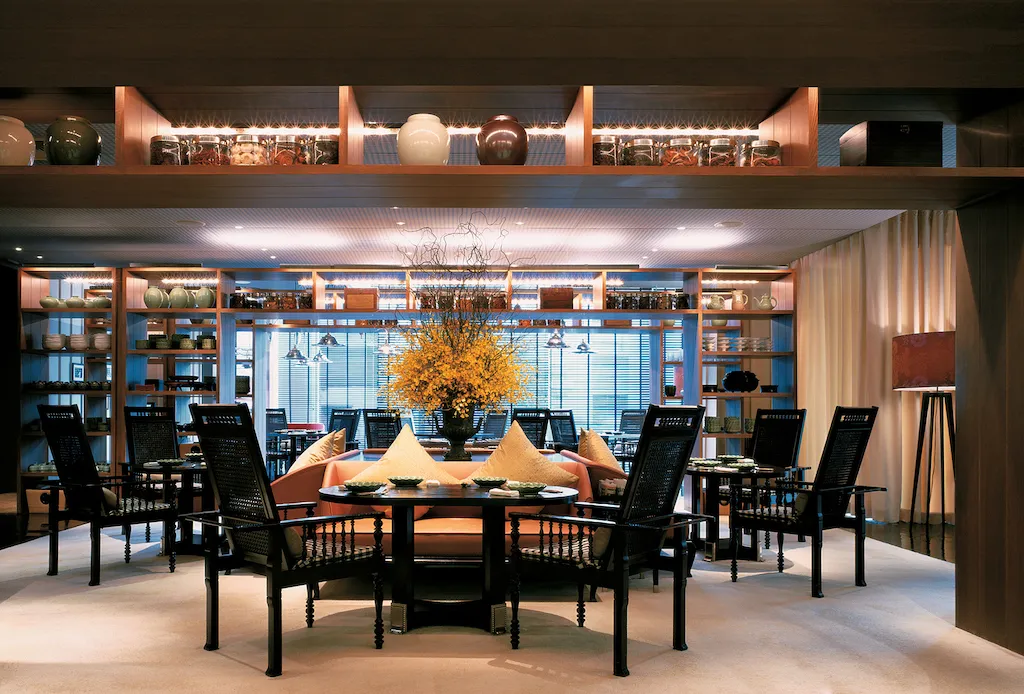
The Erawan Tea Room occupies the lobby level of the Grand Hyatt Erawan Bangkok at 494 Rajdamri Road, a short walk from Chit Lom BTS station. Afternoon tea service typically runs 2:00 PM to 6:00 PM. Hours shift seasonally — calling ahead, specifically to the restaurant rather than the hotel’s main reservations line, is advisable before you build your afternoon around it.
The set follows a classic three-tiered format with a deliberate Thai pastry element that separates it from hotels running a purely European service.
- Bottom tier (savories): Finger sandwiches — typically cucumber and cream cheese, smoked salmon blini, and a chicken herb preparation. The salmon is fresh. The chicken is competent without being memorable.
- Middle tier (scones): Two scones per person with clotted cream and jam. Strawberry is a consistent presence; seasonal Thai fruit jams rotate. Tamarind and passion fruit have both appeared depending on the month.
- Top tier (pastries): Petit fours, macarons, and the component that most clearly distinguishes the Erawan: Thai-inspired mini desserts. These typically include khanom chan (pandan layered jelly), foi thong (golden egg thread sweets), and a rotating seasonal item — in 2026, butterfly pea flower mousse has appeared on several visits.
Tea selection runs to approximately 20 varieties. The hotel sources from Dilmah with supplementary Thai herbals — butterfly pea, lemongrass, pandan — that are worth ordering if you are unfamiliar with them. Butterfly pea flower tea shifts from blue to purple when lemon is added; it is worth ordering at least once for the visual effect and because it is genuinely good. Unlimited refills are included in the set price.
| Set Option | What’s Included | Approx. Price (THB/person) |
|---|---|---|
| Classic Afternoon Tea | 3-tier stand, unlimited tea from 20+ varieties | 1,200–1,500 |
| Premium Set | As above, plus a glass of prosecco or Thai sparkling wine | 1,600–1,900 |
| Additional savory platter | Extra sandwich selection, available on request | 300–450 |
| Children’s Set (under 12) | Reduced tier, hot chocolate or juice | 600–750 |
All prices are approximate as of 2026. A 10% service charge and 7% VAT typically apply. Verify current pricing directly with the Erawan Tea Room before booking.
The Thai pastry tier is the strongest argument for this venue
Bangkok has dozens of hotels running afternoon tea. A meaningful number of them serve identical European sets with no local adaptation — scones, clotted cream, a few macarons, a pot of English Breakfast. The Erawan’s decision to integrate khanom chan and foi thong alongside Western pastries is not window dressing. These are technically demanding confections, and the execution here is generally precise. This is the clearest reason to choose the Erawan over a hotel that hasn’t made the same effort.
Tea selection in practice
Twenty varieties sounds substantial. In practice, the Dilmah selection covers expected ground: English Breakfast, Earl Grey, Darjeeling, green, jasmine. The Thai herbals are where the menu earns its specificity. First-time visitors who order only English Breakfast are technically getting good tea but missing what makes this particular menu worth noting. Ask the staff which Thai herbal is freshest that week — this typically produces a more interesting recommendation than reading from the printed list.
Dietary accommodations
Vegetarian requests are handled without requiring advance notice in most cases. Vegan sets require at least 24 hours’ notice. Gluten-free options can typically be arranged with advance notice — speak directly to the restaurant, not through a general hotel booking note, to confirm your specific requirements with the team who will actually prepare the food.
Booking the Erawan Tea Room Without Surprises
Weekend slots sell out. On Saturdays in particular, the 2:00 PM seating can be fully booked several days in advance. The following steps reflect what visitors have consistently found effective.
- Book at least 3 days ahead for weekdays, 7 days or more for weekends. The 2:00 PM slot is the most sought-after. The 4:00 PM slot typically has more availability but less natural light.
- Call the Erawan Tea Room directly rather than using the hotel’s central reservations system. The restaurant team can answer menu questions, confirm dietary accommodations, and give real-time availability without routing through a call center.
- Request window-adjacent seating when booking. The lobby-level setting means natural light varies significantly by table. A position near the windows provides a sightline toward the Erawan Shrine and is worth requesting if available.
- Arrive 5 minutes before your reservation. The Grand Hyatt lobby is large and can disorient first-time visitors. Budget a few minutes to locate the restaurant without rushing the host.
- Dress smart-casual at minimum. No formal dress code is enforced. Shorts and sandals won’t be turned away, but they will feel conspicuous. Most guests dress as they would for a midrange sit-down restaurant.
- Budget two full hours. The experience is designed for lingering. An afternoon tea finished in 45 minutes is a materially different — and lesser — experience than the same set taken slowly over multiple tea refills.
How the Erawan Compares to Bangkok’s Best Tea Rooms
Three venues compete seriously for the title of best afternoon tea in Bangkok. The Erawan is among them, but the evidence does not place it unambiguously at the top in every category.
| Venue | Setting | Price Range (THB/person) | Strongest Feature | Best For |
|---|---|---|---|---|
| Erawan Tea Room, Grand Hyatt Erawan Bangkok | Hotel lobby, Ratchaprasong intersection | 1,200–1,900 | Thai-European pastry integration; Shrine proximity | First-time Bangkok visitors; Ratchaprasong-area stays |
| Authors’ Lounge, Mandarin Oriental Bangkok | Colonial riverside pavilion, 140-year-old hotel | 1,800–2,500 | Historic atmosphere; Chao Phraya river views | Special occasions; atmosphere as the priority |
| The Lobby, The Peninsula Bangkok | Open atrium, west bank of the Chao Phraya | 1,500–2,100 | Most consistent service quality; river view | Service-focused travelers; riverfront preference |
| Afternoon Tea, The Okura Prestige Bangkok | 33rd floor, Park Ventures Ecoplex | 1,100–1,600 | Skyline panorama; easier reservations | View-seekers; slightly lower price point |
The case for the Mandarin Oriental’s Authors’ Lounge
If you’re weighing the Erawan Tea Room against the Mandarin Oriental Bangkok’s Authors’ Lounge and the experience matters more than the convenience, the Authors’ Lounge typically wins. The colonial-era riverside pavilion is one of Bangkok’s most distinctive interiors. Somerset Maugham and Noël Coward stayed here. The river breeze comes through open sides. The tea service is formally executed and the sandwiches are precise. At 1,800–2,500 THB per person it costs more — but it delivers an atmosphere the Erawan, for all its quality, cannot replicate. Book the Authors’ Lounge for anniversaries, significant birthdays, or any occasion that deserves a room with genuine history behind it.
The case for the Peninsula Bangkok
The Peninsula Bangkok’s The Lobby, on the Chao Phraya’s west bank, runs the most consistently polished service of any Bangkok afternoon tea. Staff training here is notably precise. The river-facing atrium is beautiful. The three-tier set executes European classics with fewer local surprises than the Erawan — whether that’s an advantage depends on whether you want Thai pastry integration or a more traditional European format. Peninsula Bangkok pricing of approximately 1,500–2,100 THB per person is directly competitive with the Erawan. For travelers who weight service consistency above menu creativity, the Peninsula is the defensible choice. For those who want the Thai element woven in, the Erawan wins that specific comparison.
Three Mistakes That Make Afternoon Tea Here Less Worth the Price
Not building in enough time. Afternoon tea at the Erawan is a two-hour experience structured around multiple rounds of tea refills, unhurried progression through tiers, and the ambient leisure of a well-designed lobby. Visitors who arrive with 60 minutes before their next obligation typically feel rushed and leave without finishing the pastry tier. This accounts for most of the negative reviews this venue receives — and in most of those cases, the problem was scheduling, not the tea room itself.
Skipping the Erawan Shrine before the reservation. The Thao Maha Phrom Shrine immediately adjacent to the Grand Hyatt is one of Bangkok’s most visited religious sites. Arriving 20 minutes before your reservation to observe devotees making offerings, watch the traditional Thai dance performers, and understand why this intersection holds such significance costs nothing. The hotel’s name is not incidental to its location. Visitors who walk directly from the taxi into the lobby miss a genuinely distinctive Bangkok experience that requires no additional time or money to access.
Arriving after a heavy lunch. The three-tier stand delivers more food than most visitors expect. Guests who’ve eaten a substantial midday meal often manage the savory tier but struggle by the time the pastry course arrives. If this applies to your situation, ask when booking whether a reduced set or lighter option is available. Some guests report success with this request; others are charged the standard set price regardless. Confirming in advance is the cleaner approach.
The Shrine Next Door Is Part of the Experience
The Erawan Tea Room’s single most defensible advantage over the Peninsula and Mandarin Oriental is geographical. The Thao Maha Phrom Shrine sits immediately outside the Grand Hyatt. No other luxury Bangkok tea room offers what the Erawan can: the straightforward combination of observing one of Bangkok’s most spiritually active public spaces and then walking directly inside for a formal afternoon tea. For many visitors, this geographical fact is sufficient reason to choose the Erawan regardless of where the pastry tier or service consistency ranks against competitors. The Peninsula has a better river. The Mandarin Oriental has better history. The Erawan has Bangkok happening right outside the window.
When to Choose a Different Bangkok Tea Room Instead
Is the Erawan worth it for solo travelers?
Generally yes, with one practical concern. Solo afternoon tea is socially comfortable here — the lobby activity provides something to observe, and staff handle single-guest seating without awkwardness. The concern is volume: a three-tier stand is a substantial quantity of food for one person. Ask when booking whether a reduced or single-guest portion is available. Some guests confirm success with this request; others pay the full set price regardless. Clarifying before arrival avoids an uncomfortable conversation at the table.
Should you choose the Erawan for a special occasion?
Probably not as the first choice. For birthdays and anniversaries, the Mandarin Oriental’s Authors’ Lounge carries more emotional weight. The historic riverside pavilion, the river views, the sense that you are somewhere genuinely storied — these factors matter on occasions when the room itself is part of what you are celebrating. The Erawan is an excellent choice for an afternoon out. As the backdrop for a significant milestone, the Authors’ Lounge typically justifies the higher price for guests to whom the setting matters.
What if your hotel is on the river, not near Ratchaprasong?
If you are staying at a riverside property — the Capella Bangkok, the Rosewood Bangkok, or the Peninsula itself — the travel time to the Erawan Tea Room is 20–30 minutes each way, longer in traffic. In that situation, the argument for the Peninsula’s The Lobby or the Mandarin Oriental’s Authors’ Lounge becomes more practically compelling. The Erawan is the right choice when you are already in the Ratchaprasong area. It is a harder case to make when it requires an hour of round-trip transit in a city where traffic is genuinely unpredictable.
What if you have children with you?
The Erawan Tea Room is workable with children who handle seated, quieter environments calmly. Hotel staff are experienced with family visits. The lobby setting is less formally rigid than some tea rooms — ambient noise is present, which reduces the pressure on young guests to maintain complete silence. A children’s set at approximately 600–750 THB is typically available; confirm when booking. Children under 4 or 5 in any extended formal dining context present the usual challenges, and this venue is no exception.
The Erawan Tea Room’s strongest case is its simplest: consistently good execution, a central location, fair pricing for what it delivers, and an embedding in Bangkok’s geography — that shrine, that intersection — that the city’s riverside tea rooms cannot replicate. For most first-time Bangkok visitors searching for afternoon tea that requires no further justification, this is typically the correct choice.
This is not legal advice — consult a licensed attorney.