Welcome to Manila: no gentle introduction
The moment you walk out of Manila airport, the city hits you hard — the heat, the noise, the colour. Manila is one of those places people say you have to learn to love, and for first time visitors to Asia it can definitely be intense.
Traffic is relentless. Drivers weave around one another with casual bravery, ignoring lanes and inventing new ones as they go. Overnight? Not an escape – when we were collected for our return airport transfer at 5am, the roads were still packed.
Metro Manila is vast — around 14 million people spread across 17 the ‘cities‘ that make it up, and with that comes the kind of bustle that never switches off. Plenty of guides suggest treating the capital as an overnight stop before island hopping, but once you push past the overwhelm and embrace the chaos, Manila has a lot to offer.
Intramuros: Manila’s historic walled city
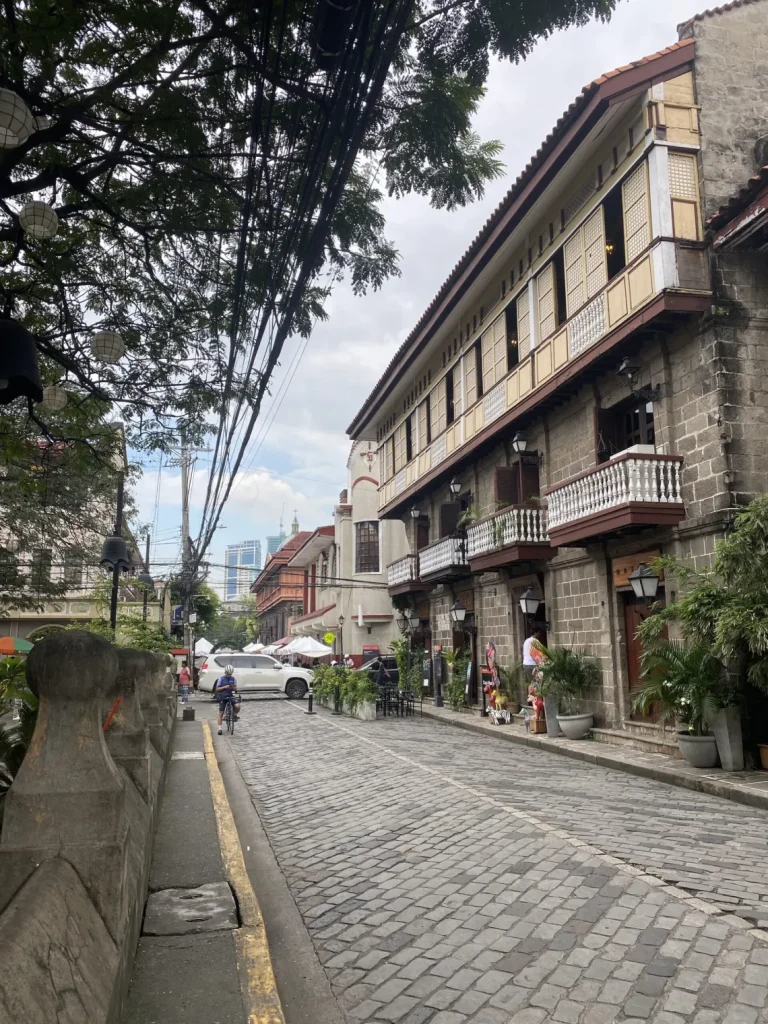
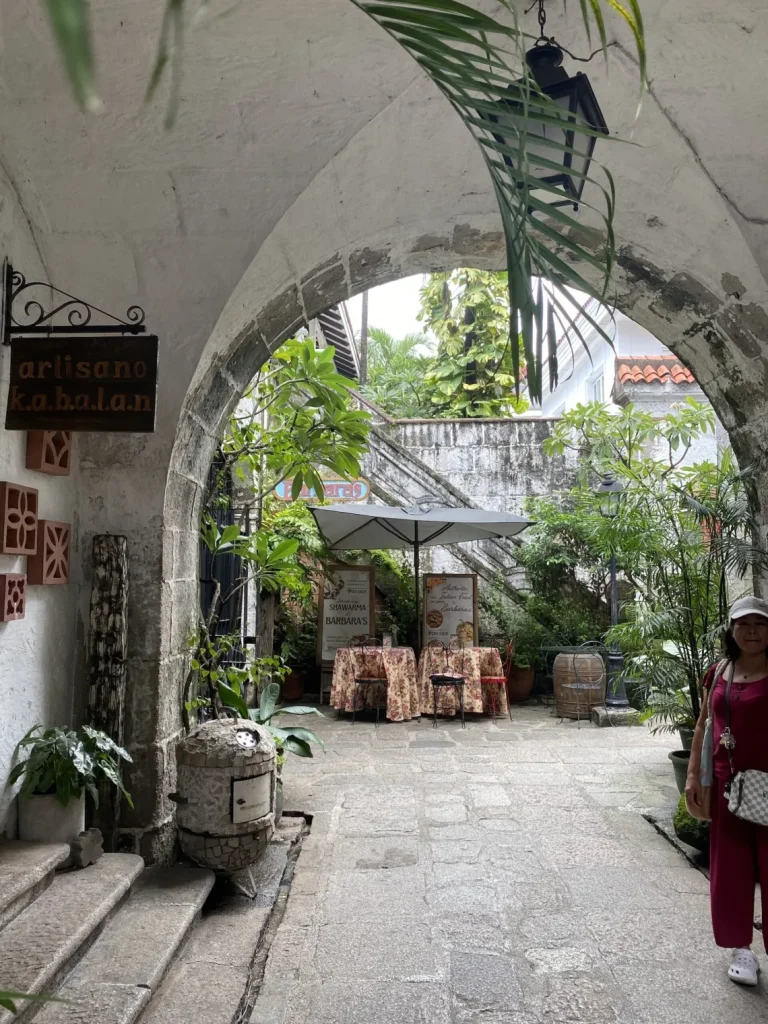
Our first full day was spent in Intramuros, the historic heart of Manila. Its name literally means “inside the walls”, and the district really does feel like a city within a city.
Stepping through the gates is like stepping into a different era: cobbled streets, Spanish-style architecture, tiny cafés tucked inside old stone buildings, quiet plazas and leafy boulevards. Intramuros is charming, atmospheric and surprisingly European.
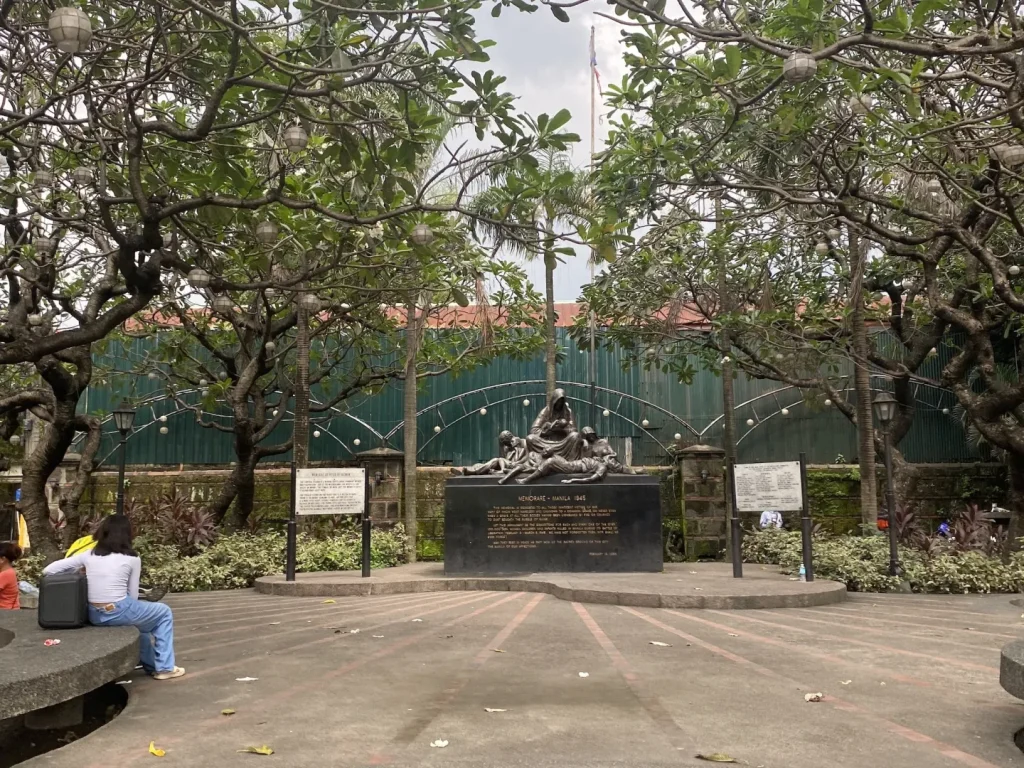
Intramuros was where I first learned about the Battle of Manila, one of the most devastating episodes of WWII in the Pacific. I’d never heard of it before arriving, but once you discover the scale of destruction, loss and rebuilding that took place, you see the city through completely different eyes. It’s worth taking a few minutes to visit the war memorial, which has some detailed information on the battle, the damage done to this part of the city and its people. It might dull that happy holiday feeling for a while, but in today’s political climate I think its more important than ever to know what happened in the past, and hopefully learn from those mistakes.
Highlights of Intramuros
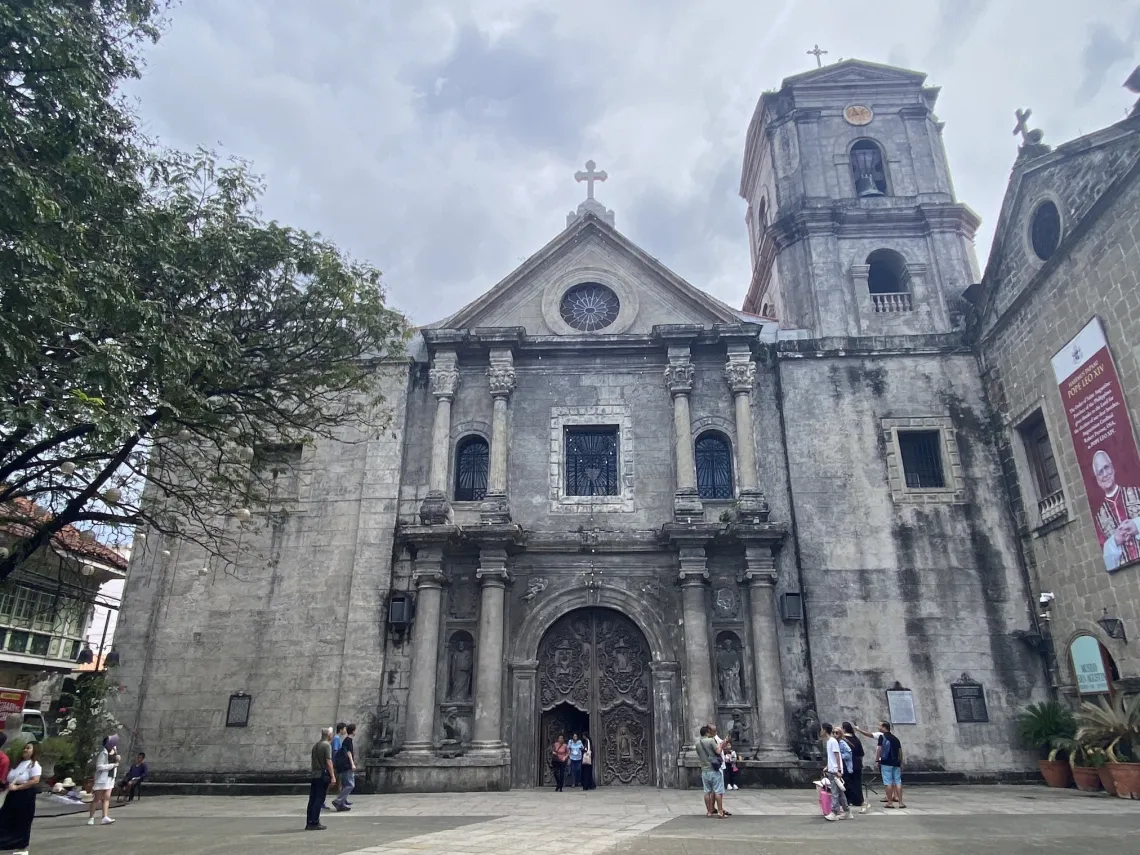
Intramuros is packed with places to explore. The district is home to the magnificent San Agustin Church, a UNESCO World Heritage site known for its ornate interiors and centuries of religious history, along with Casa Manila, a beautifully restored Spanish colonial home that offers a glimpse into life during the 19th century. Sadly we visited during a national holiday so we were only able to see the exteriors of both attractions.
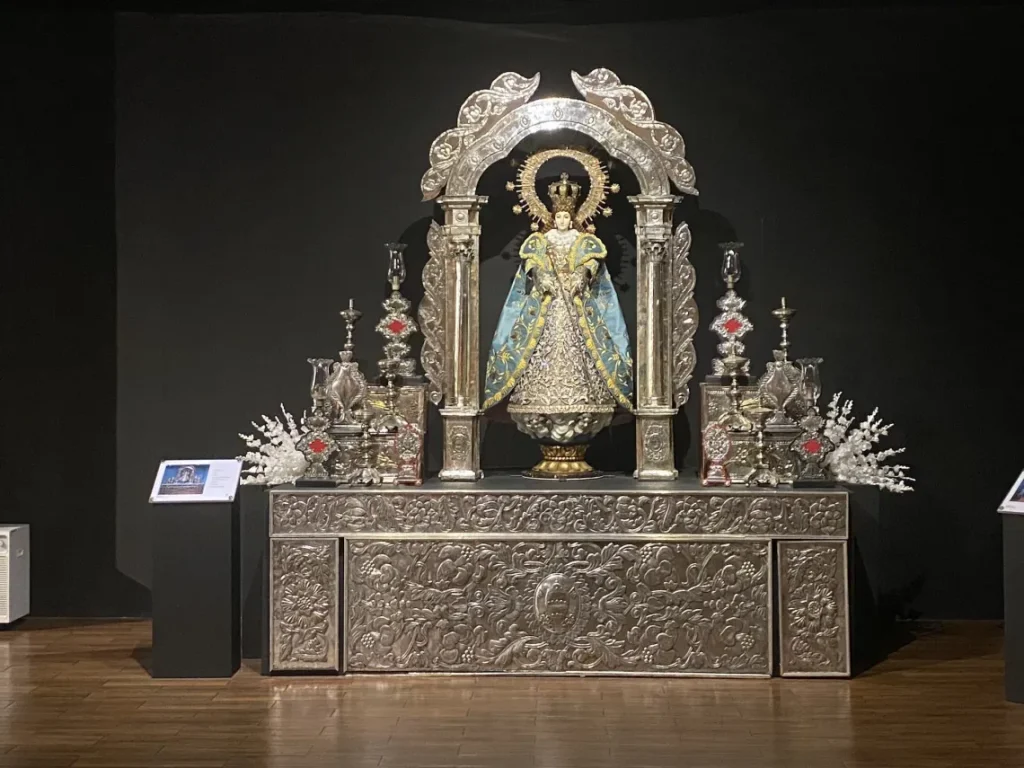
We did manage to visit the Intramuros museum though, which covered the city’s history and had a rather large collection of ornate alters. One of the district’s most famous landmarks is Fort Santiago, a powerful symbol of the city’s colonial history. Beyond the major attractions, Intramuros charms with its cobbled plazas, shaded courtyards, and a growing collection of independent cafés and restaurants, making it the perfect place to wander slowly and soak up the atmosphere.
Walking the old city ramparts was a highlight – literally tracing the outline of history with modern Manila rising around you. The strangest, most wonderful bit? A golf course right beside the walls.
Watching golfers tee off while I stood atop stone centuries-old walls was as surreal as it sounds: a real Manila moment.
Fort Santiago, Manila
Fort Santiago was one of my favourite stops. It’s set in peaceful, well-kept gardens that feel like a green haven in the midst of the city. I loved wandering through the fort’s nooks and crannies – and yes, the moat did have water (rare for historic forts, and slightly smelly in the heat, but still brilliant).
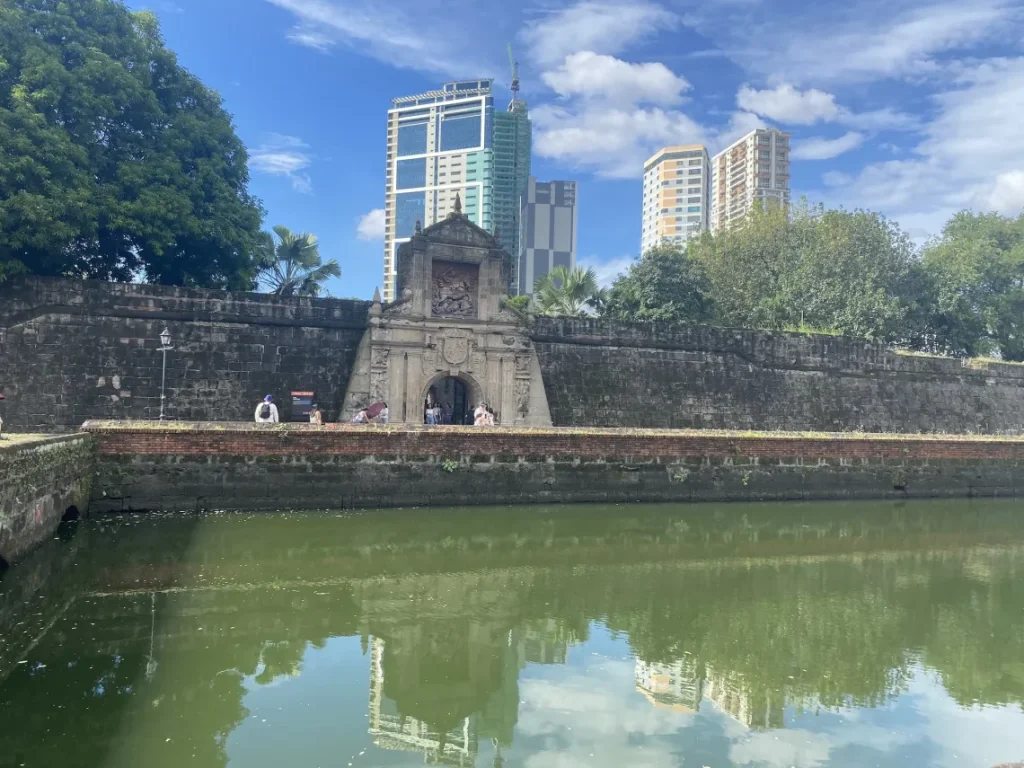
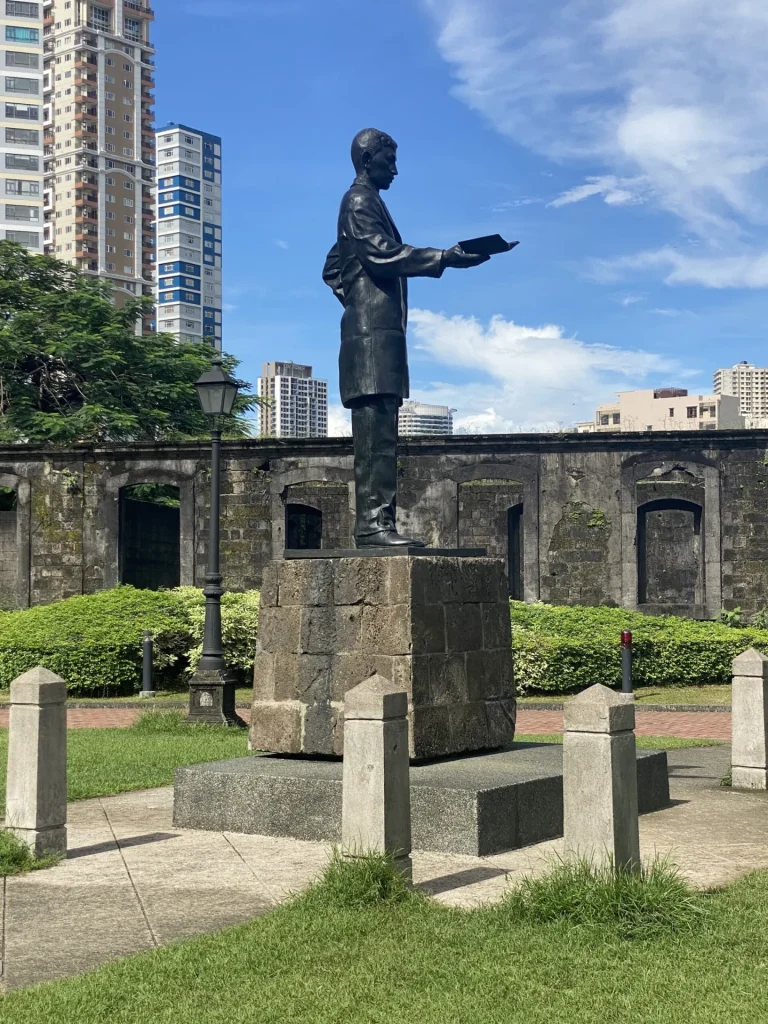
Inside the fort you’ll find markers and plaques telling the story of José Rizal, one of the Philippines’ national heroes. He was a writer and activist who campaigned for peaceful reform under Spanish rule. A thinker and teacher rather than a soldier, he was sadly executed for sedition and conspiracy in 1896. The path of his last steps is even marked through the fort.
While exploring the fort, we made a stop at Papakape Café, a small café tucked inside the walls. It was the perfect place to rest and recharge before heading back out into the heat. We even made a new feline friend while we were there –Tiago. He’s a bit of a local celebrity, with people coming in just to see him! Comfy in one of th chairs, we sat around him and enjoyed our drinks while giving him a fuss.
Binondo and Quiapo: Manila beyond the walls
Just outside the Fort, across the Pasig River, lies Binondo, the world’s oldest Chinatown. We tried following a self-guided walking tour here, but the route was hard to track and the streets were busy, so we eventually abandoned the map and explored freely instead. In many ways, that felt more fitting: Binondo is a place best experienced by wandering without a plan.
From there, we continued into Quiapo, home to some of Manila’s most important Catholic sites. Visiting during All Saints Day meant the atmosphere was even more intense than usual.
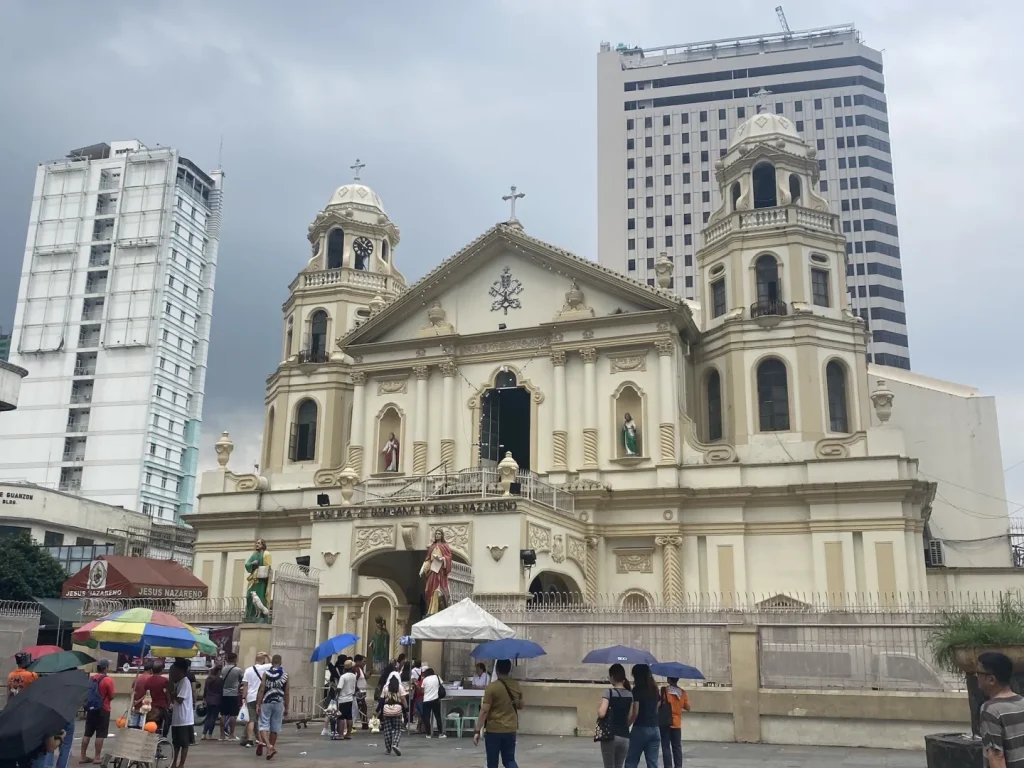
We arrived at Quiapo Church, also known as the Minor Basilica of the Black Nazarene, one of the most significant religious sites in the Philippines. The church houses the revered statue believed by many to be miraculous and credited with healing powers. Pilgrims travel from across the country to pray before the statue, and during major feast days millions gather here to take part in processions. Even on a normal day, the square outside the church is busy; on All Saints Day, it was absolutely heaving.
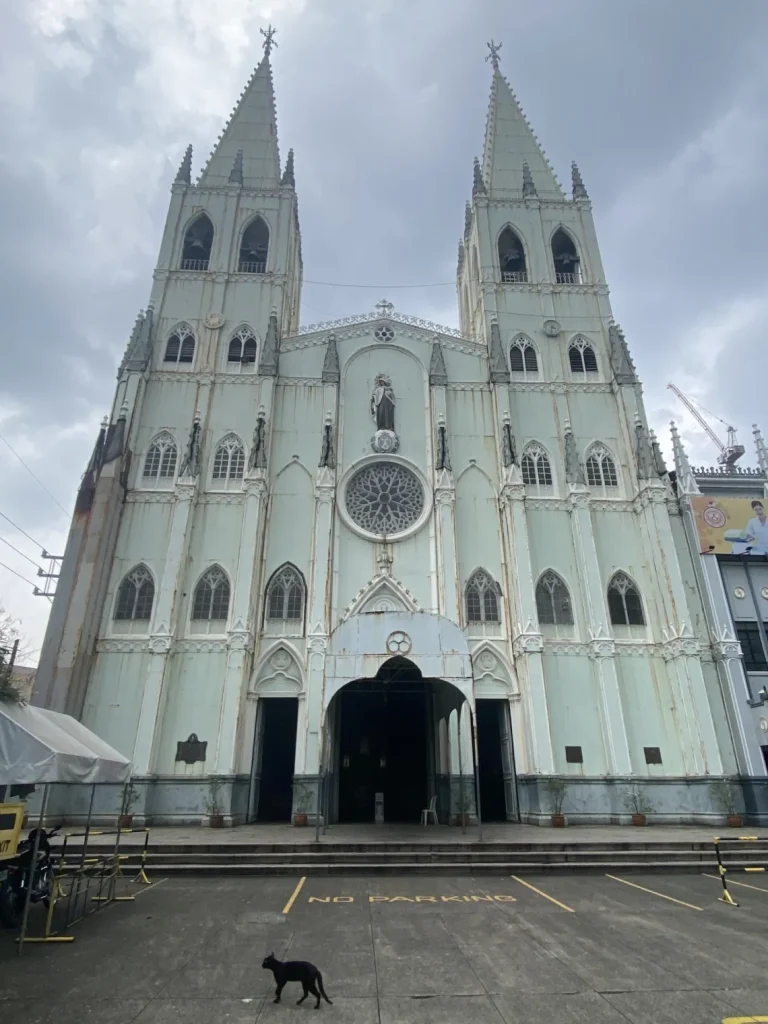
We also visited San Sebastian Church, one of Manila’s most distinctive architectural landmarks. Unlike the city’s many stone-built churches, San Sebastian is constructed entirely from prefabricated steel, making it the only all-steel basilica in Asia and the first in the world. Completed in 1891, the structure was designed to withstand fire and earthquakes, and its pale green interior, vaulted ceiling and stained-glass windows create a surprisingly light, airy space.
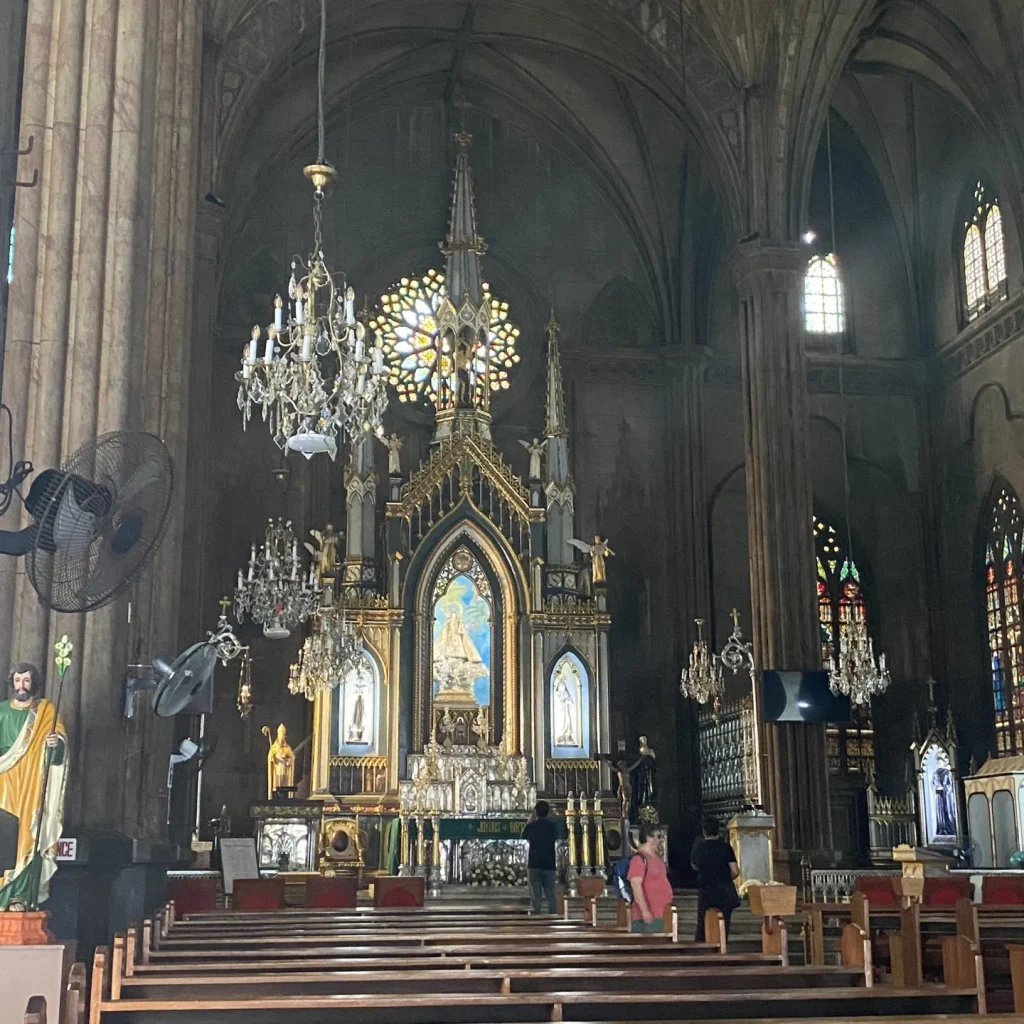
Taken together, Binondo and Quiapo offered a completely different side to Manila – busier, louder and more intense than Intramuros, but full of character and deeply rooted in history, faith and everyday culture.
The Mall of Asia: huge, cool and genuinely fun
Visiting a mall isn’t the first thing most people think of on a city break, but the Mall of Asia is a Manila institution and easily one of the largest in the world — covering well over 400,000 square metres of shops, restaurants, theatres and entertainment.
It’s more than retail – it’s social space. Families gathered for dinner, couples strolled along the seaside promenade, kids rode on fairground rides, and yes, the Christmas decorations were up — in October. Ask a local and they’ll tell you: “It’s never too early for Christmas in the Philippines!”
We barely scratched the surface, but on a hot evening, walking here offers a great slice of everyday city life and, honestly, the air-con was a gift.
What we ate: Manila’s delicious surprises
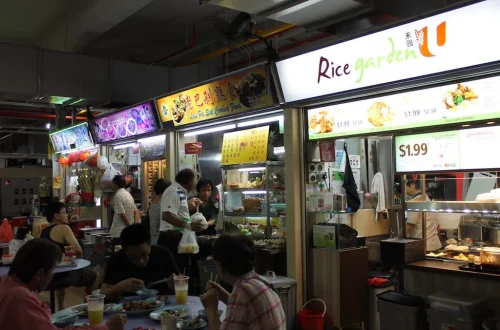
Food in Manila was a revelation — colourful, comforting, fun and often surprising. Here are the highlights from our two-day whirlwind:
Chow King: Filipino fast-food comfort
This national chain quickly became one of our favourite stops for quick, tasty meals. And it’s where we had halo halo for the first time — a cold dessert layered with sweet beans, fruit, jelly, crushed ice and milk. Sweet, refreshing and very local.
Max’s Restaurant
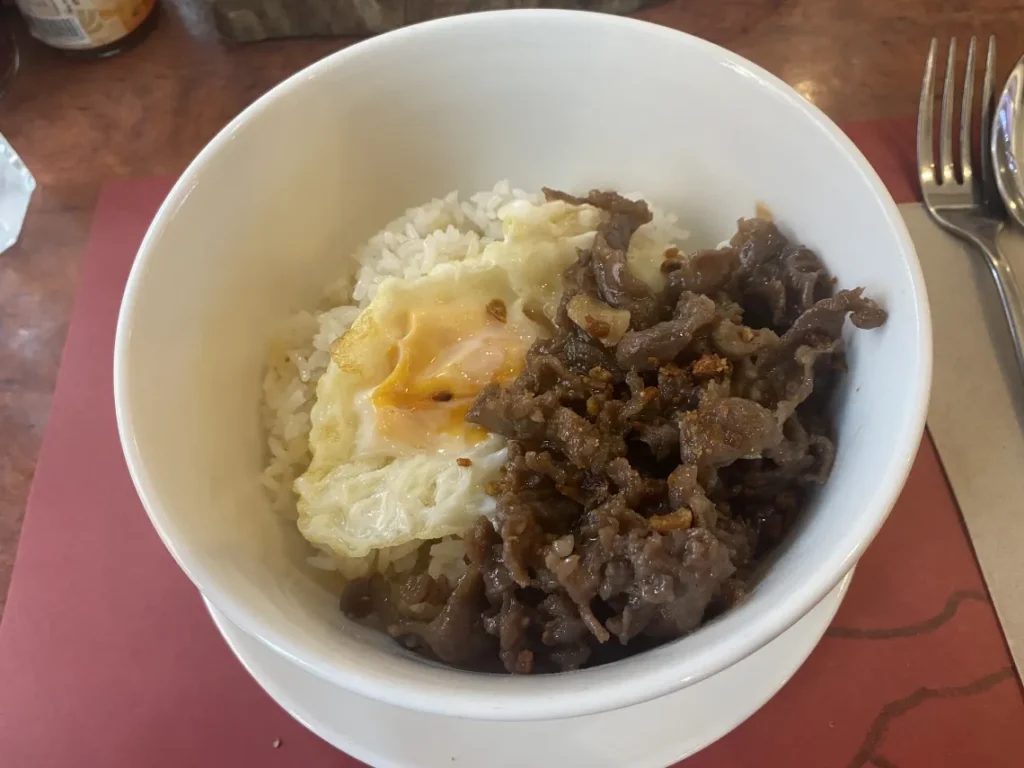
Next to Intramuros, Max’s felt like real local life. We ordered fried chicken, sides and rice — and it was here that I discovered my obsession with garlic rice. Don’t underestimate this staple: it’s simple, flavourful and addictive.
Sizzling tofu — and the start of a love affair
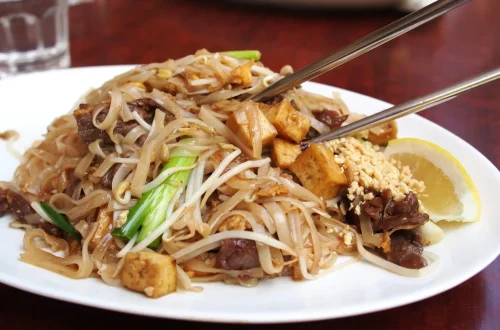
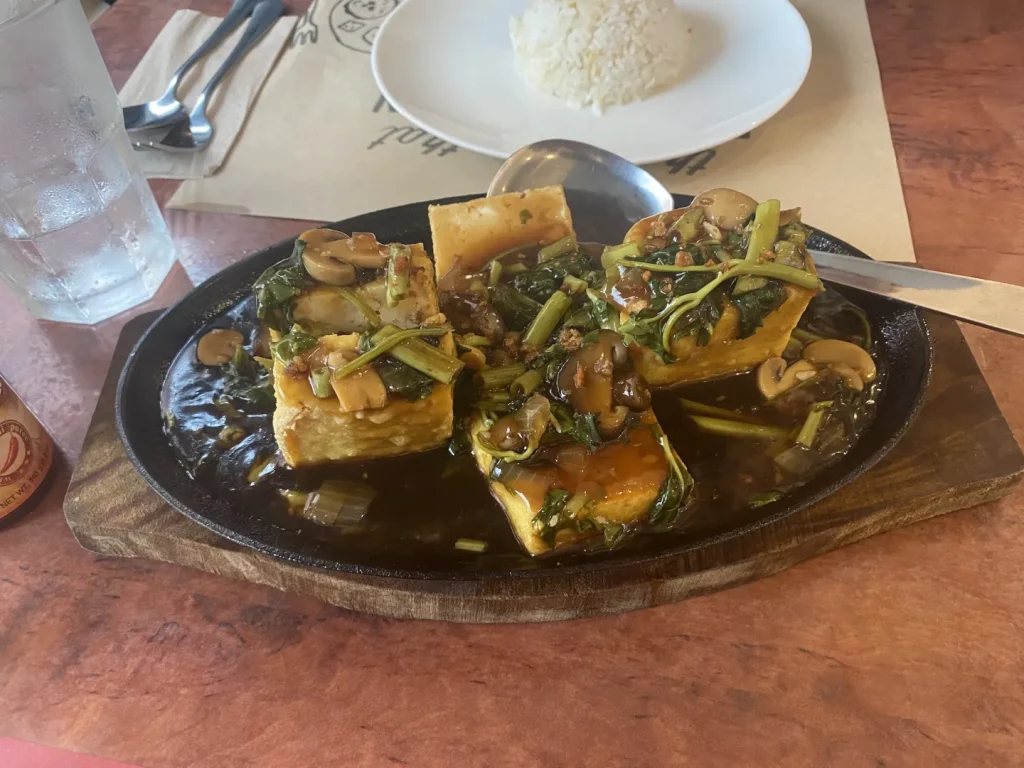
Sizzling tofu appeared on menus everywhere, and we tried it multiple times. It arrived still bubbling in a hot skillet — smoky, rich and delicious. The best version we had on the whole trip was later at Sunset Restaurant in Coco Grove on Siquijor, but Manila was where the love began. More on that in our upcoming Siquijor hotel review.
Pick Up Coffee
This local coffee chain was a daily find. Rosie ordered a pistachio milk coffee for 99 pesos and can’t wait to try the ube milk version next.
McDonald’s
Ok, ok, I know Im gonna get some stick for including this, but one of the fun things we like to do when travelling is try out the local specialities the big fast food chains do in different countries. My highlight so far has been the hot and spicy popcorn chicken at an Indian KFC, but here our son was desperate to try a McDo. This is a piece of battered chicken from what I could assertain, but its what it comes with that’s a bit out of the ordinary. You can have rice, sure, but there’s a version of the McDo that comes with a siode of spaghetti bolognese! How random! Oh and you can top it off with a coke float. I mean, why doesn’t everywhere do this?
Manila travel tips for first-timers
Manila’s traffic isn’t just bad — it’s legendary. Even short distances can take far longer than expected, and there’s no such thing as a quiet hour. Grab, the Asian version of Uber, is widely used and works well for getting around, and metered taxis are straightforward if you stick to official ranks. For a more local experience, you can also try riding a jeepney – Manila’s brightly decorated shared minibuses – though routes can be confusing if you don’t know the system. However you travel, allow plenty of extra time and avoid tight schedules where possible.
You’ll also be doing a lot of walking, especially in areas like Intramuros and Quiapo where the best experiences often come from simply wandering. Comfortable shoes are a must, and expect uneven surfaces, cobbled streets and long distances between attractions. Manila rewards slow exploration, so build that into your plans.
The heat and humidity are constant, regardless of season. Even in the shade, temperatures rise quickly and sightseeing can feel draining, particularly in the historical districts where open space is limited. Carry water, wear light layers and keep sunscreen on hand, and don’t be afraid to duck into a café, shop or museum to cool off.
It’s also worth checking the calendar before planning a day out. Religious holidays, such as All Saints Day, can affect museum and church opening hours – as we discovered the hard way, and may draw huge crowds to certain areas. That said, stumbling into moments like this can be as memorable as any landmark.
Final thoughts: Is Manila worth visiting?
For me, absolutely yes. Manila isn’t gentle, quiet or easy, but it is alive: loud, warm, messy, historic, vibrant, sometimes baffling, and unforgettable.
If you’re flying into the Philippines and planning to go island hopping, or spending time in places like Bohol, Cebu or Siqujor, don’t skip the capital. Spend two days here. Walk the walls of Intramuros. Try halo halo. Eat garlic rice. See Fort Santiago. Explore Binondo. Go to the mall — yes, the mall!
Manila isn’t just a gateway city – it’s a place worth experiencing. And once you do, you might just fall for it too.