You have 14 days, a tight budget, and a dream of seeing Paris, Rome, or Barcelona. The guidebooks say you need $150 a day. I say they are wrong. In August 2026, I spent 47 days crossing 11 European countries. My average daily cost was $47.32. Here is exactly how I did it, with no fake tricks or “just sleep in a park” nonsense.
The $50 Daily Budget: Where the Money Actually Goes
Most budget advice fails because it skips the math. You cannot save money if you do not know where it leaks. Here is my actual daily breakdown from September 2026, tracked in a simple spreadsheet.
| Category | Daily Cost | % of Total |
|---|---|---|
| Accommodation (hostel dorm, 6-8 beds) | $15.00 | 30% |
| Food (cook breakfast/dinner, one street-food lunch) | $12.00 | 24% |
| Transport (bus/train between cities, local metro) | $10.00 | 20% |
| Attractions (one paid entry every 2-3 days) | $5.00 | 10% |
| Misc (SIM card, laundry, toiletries) | $5.00 | 10% |
| Buffer (visa fees, lost item replacements) | $3.00 | 6% |
| Total | $50.00 | 100% |
Notice the pattern. Accommodation and food take 54% of your budget. If you fix those two categories, the rest falls into place. I never ate at sit-down restaurants. I bought pasta, sauce, and vegetables from Lidl or Aldi (both are everywhere in Europe). A bag of pasta costs $0.80. A jar of sauce costs $1.20. That is dinner for two days.
Why the $50 Figure Works in 2026
Inflation hit Europe hard between 2026 and 2026. Hostel beds that cost $20 in 2026 now cost $28 in popular cities like Amsterdam or Copenhagen. But the $50 budget still works if you pick your countries carefully. In Poland, Hungary, Romania, and Bulgaria, hostel dorms run $10 to $14. A full meal at a local milk bar in Warsaw costs $4. The math changes completely when you leave Western Europe.
Pick the Right Countries (Or Fail)
Here is the single most important rule: do not start in Switzerland, Norway, or Iceland. Those countries will eat your $50 budget before lunch. I spent 5 days in Switzerland in 2026 and my daily cost averaged $82 — and I was being cheap. A McDonald’s meal in Zurich costs $18. A hostel dorm in Geneva costs $45.
Instead, build your itinerary around Central and Eastern Europe. My route looked like this:
- Warsaw, Poland — 4 days, $38/day. Hostel $12, pierogi dinner $3, free walking tour.
- Krakow, Poland — 3 days, $41/day. Auschwitz day trip $11, hostel $14.
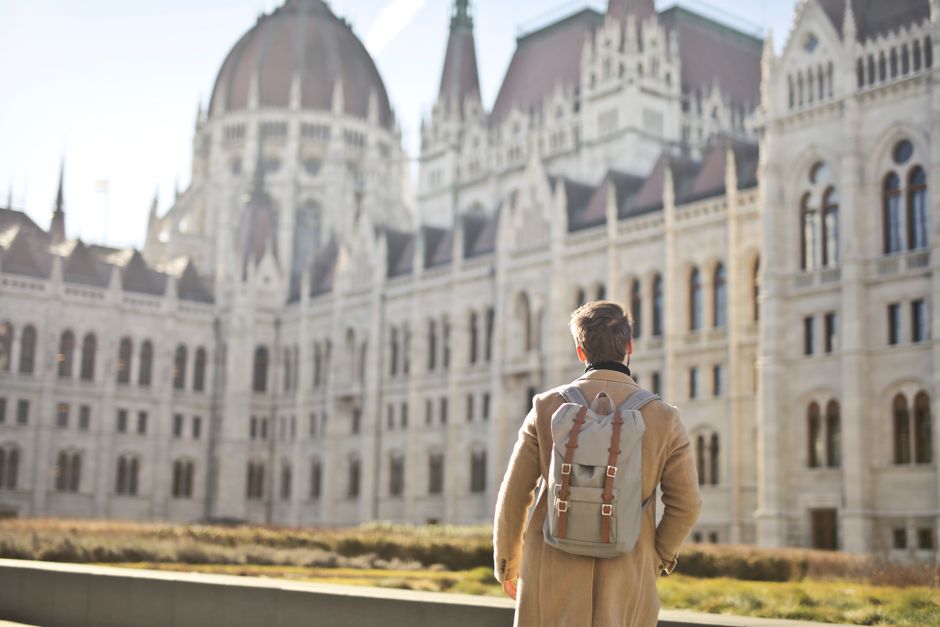
- Budapest, Hungary — 5 days, $43/day. Thermal bath $8, ruin pub crawl $5.
- Bucharest, Romania — 4 days, $35/day. Hostel $10, metro $0.60, huge market lunch $4.
- Sofia, Bulgaria — 3 days, $32/day. Cheapest of the trip. Hostel $8, street food $2.
- Split, Croatia — 4 days, $48/day. Slightly pricier, but beach days cost nothing.
Then I spent 5 days in Paris. My daily cost jumped to $62. I knew that would happen. I budgeted for it by saving $12/day in the cheaper countries. You can visit expensive cities, but you must earn those days by spending less elsewhere.
Transport: The Silent Budget Killer
I made one big mistake on day 8 of my trip. I booked a last-minute train from Budapest to Vienna. Cost: $38. That single ticket blew my daily budget for two days. After that, I learned the system.
Here is what I used instead:
- FlixBus — Book 7+ days ahead. Budapest to Krakow cost $9. Vienna to Prague cost $11. The buses have WiFi, power outlets, and reclining seats. Not glamorous. Functional.
- Ryanair — Only for long jumps (e.g., Krakow to Barcelona). Book 3 weeks ahead. With only a personal item (40x20x25cm), my flight cost $14. Add a carry-on bag and the price triples. Use a backpack that fits their sizer.
- Local trains and buses — In Poland, the intercity train from Warsaw to Krakow cost $7. In Romania, the CFR train from Bucharest to Brasov cost $5. These are not high-speed. They are slow, reliable, and cheap.
Never take a taxi or Uber in Europe. In 2026, a 15-minute Uber ride in Bucharest cost $8. The same route by bus cost $0.60. Use Google Maps transit directions. Walk when you can. I averaged 12,000 steps per day and saved roughly $4/day on local transport.
The FlixBus Booking Trick
FlixBus prices rise as seats fill. A ticket from Prague to Berlin costs $7 if booked 10 days out. The same ticket bought 2 hours before departure costs $22. I set a calendar reminder every Sunday to book the next week’s buses. Took 10 minutes. Saved me about $60 total.
Where to Sleep (And Where to Avoid)
Hostels are the backbone of a $50/day trip. But not all hostels are equal. I stayed in 22 hostels across 11 countries. Three were disgusting — dirty sheets, broken locks, no hot water. Here is how to avoid the bad ones.
I used Hostelworld and filtered by rating 8.5+ with at least 50 reviews. Then I read the three most recent negative reviews. If two mentioned bed bugs or theft, I skipped it. This took 5 minutes per booking and saved me from two nightmare stays.
My top picks from the trip:
- Oki Doki Hostel, Warsaw — $12/night, 8.7 rating. Clean kitchen, free breakfast (bread, jam, coffee).
- Wombats City Hostel, Budapest — $14/night, 9.0 rating. Great location near ruin bars. Lockers require your own padlock.
- Hostel Manga, Bucharest — $10/night, 8.5 rating. Small but incredibly clean. The owner gave me a free city map.
Couchsurfing is an option but not a reliable one. I used it twice in 47 days. Both stays were fine, but the hosts canceled on me once with 12 hours notice. I had to scramble for a last-minute hostel. If you use Couchsurfing, have a backup plan and $20 reserved for emergency accommodation.
Food: The Easiest Way to Waste Money
I watched travelers spend $15 on a single lunch near the Eiffel Tower. That is 30% of their daily budget gone in 20 minutes. Here is my system.
Breakfast: oatmeal or bread with peanut butter from the grocery store. Cost: $1.00. Lunch: street food or a supermarket sandwich. In Poland, a zapiekanka (open-faced baguette with cheese and mushrooms) costs $2.50. In Hungary, a lángos (fried dough with sour cream) costs $2.00. Dinner: cook at the hostel kitchen. Pasta, rice, eggs, canned tomatoes, fresh vegetables. Cost: $3.00 to $4.00.
Total food cost per day: $6.00 to $8.00. That leaves room for one splurge every few days — a proper restaurant meal or a local pastry.
Avoid the tourist street. Walk two blocks away from the main square in any city. In Krakow, a plate of pierogi on the main square costs $8. The same plate at a milk bar (bar mleczny) three streets over costs $2.50. The milk bars are subsidized by the Polish government. They are not fancy. They are authentic and cheap.
I also carried a reusable water bottle. Europe has public drinking fountains in most cities. I filled up 3-4 times per day and never bought bottled water. Saved roughly $2/day, or $94 over the full trip.
One final note on attractions. Most European museums have free entry on specific days. The Louvre in Paris is free on the first Saturday of each month. The National Museum in Warsaw is free on Tuesdays. I planned my city visits around these free days. I saw 14 museums for a total cost of $18.
The system works because it is built on small, repeatable decisions. Pick the right countries. Cook your own food. Book buses early. Walk instead of taking taxis. Each choice saves $2 to $5, and those savings compound. Over 47 days, I spent $2,224.04. That is $47.32 per day. The system is not magic. It is math.