Portugal’s big cities now run on tourist autopilot. Tram 28 has a queue longer than a Ryanair boarding line. The pastel de nata at Manteigaria costs double what it did three years ago. The real Portugal still exists — you just need to drive two hours inland or north.
These ten towns solve the actual problem: crowds, homogenized food, and Instagram-overrun viewpoints. Each one delivers something specific — a castle, a beach, a meal, a silence — that Lisbon and Porto can no longer offer.
The Stone Villages: Monsanto and Piódão
Monsanto is what happens when a village grows out of boulders instead of around them. Houses squeeze under granite slabs the size of delivery vans. Some kitchens have a 200-ton rock as one wall. It won Portugal’s “most Portuguese village” contest years ago and then promptly got quieter, because the drive deters day-trippers.
Piodão, four hours north, is the opposite aesthetic: schist houses stacked like dark gray stairs on a hill so steep the streets are actually staircases. Both towns have fewer than 1,000 residents. Both feel like film sets, except people actually live there.
When to go
May or September. Summer brings heat and Portuguese tourists. Winter brings rain and shuttered restaurants. The Taverna Lusitana in Monsanto serves a wild boar stew that justifies the drive alone. In Piodão, Inatel Piodão is the only real hotel — book a month ahead for weekends.
Getting there without a car
You can’t, realistically. Rede Expressos runs buses to Castelo Branco, then you need a taxi for the final 40 minutes to Monsanto. Rent a car. A small one. The roads into Monsanto are narrow enough that a Fiat 500 feels like an SUV.
Verdict: Monsanto for drama, Piodão for silence. If you only have one day, pick Monsanto — it’s closer to the A23 highway and has more food options.
Coastal Towns Without the Algarve Chaos
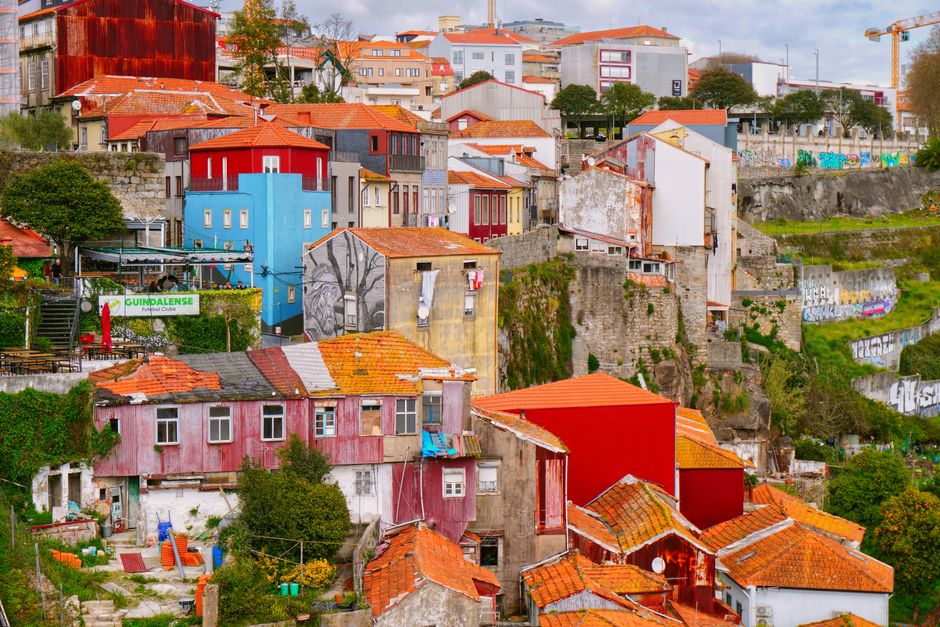
The Algarve now books out by March. Azenhas do Mar and Costa Nova offer the Atlantic without the sunburned-brit-pack vibe. Azenhas do Mar is a white village pasted onto a cliff 40 minutes from Lisbon. The ocean pool at the base fills with seawater at high tide. You swim while waves hit rocks ten meters away.
Costa Nova, near Aveiro, is a different animal: striped candy-colored houses facing a wide, empty beach. These aren’t fishing huts anymore — they’re short-term rentals — but the beach itself stays quiet even in August. The water is colder than the Algarve. That’s the tradeoff, and it’s a good one if you hate crowds.
| Town | Distance from Lisbon | Beach Crowd Level (Aug) | Water Temp (July) | Best For |
|---|---|---|---|---|
| Azenhas do Mar | 40 min | Moderate | 18°C | Dramatic cliff swims |
| Costa Nova | 2.5 hrs | Low | 17°C | Long empty beach walks |
| Comporta | 1.5 hrs | Low-moderate | 19°C | Rice fields + dunes + good food |
Comporta deserves its own mention. It’s not a hidden gem anymore — the New York Times killed that years ago — but the beach stretches so far that you can always find a spot alone. The real draw is the food. Restaurante Sal serves rice with razor clams that costs less than a Lisbon airport sandwich.
Verdict: Azenhas do Mar for the view, Costa Nova for actual solitude, Comporta for the best meal.
Border Fortresses: Marvão and Sortelha
Marvão sits on a granite ridge so high you can see Spain on a clear day. The castle walls drop straight into a valley of cork oaks. Sortelha is smaller, rougher, and even less visited. Both towns exist because medieval kings needed to watch the Spanish border. That defensive purpose left behind the best-preserved stone architecture in Portugal.
Walk the Marvão walls at sunset. You’ll hear nothing but wind and sheep bells. The town has one main street, two restaurants worth eating at, and a pousada inside the castle walls. Pousada de Marvão costs around €110 a night in shoulder season — half what you’d pay for a Lisbon room with a view of a parking garage.
Sortelha’s appeal is rawer. The houses are granite, the streets are granite, the castle is granite. The Casa da Lagariça rents stone cottages from €80. Bring food — the one cafe closes early and the nearest supermarket is 20 minutes away in Sabugal.
Failure mode: Don’t visit both on the same day. They’re two hours apart on slow roads. Pick one, stay overnight, and let the place empty out after the day-trippers leave at 5 p.m.
Évora and Tavira: The Two That Almost Made It Big
Évora has a Roman temple, a chapel made of bones, and a university that keeps the town alive year-round. It’s on the UNESCO list, so it gets tour buses. But those buses leave by 4 p.m., and the town transforms. Stay at Albergaria do Calvário (€140, breakfast included, olive oil from their own farm) and you’ll have the medieval streets almost to yourself after dark.
Tavira, in the eastern Algarve, is the exception to the Algarve rule. The town sits on the Gilão River, not the beach. You take a small ferry to the sandbar island. The old town has Portuguese people living in it, which is rare for the Algarve coast. Eat at Aquasul — a Swiss-Portuguese couple runs it, and the octopus is the best I’ve had anywhere in Portugal.
Verdict: Évora for history and food, Tavira for a base that doesn’t feel like a resort. Both work as 2-night stops.
Ponte de Lima: Portugal’s Oldest Town, Still Ignored
Ponte de Lima got its charter in 1125. That makes it Portugal’s oldest town. The Roman bridge over the Lima River still stands and still carries foot traffic. Every second Monday, the town hosts one of Portugal’s largest rural markets — cheese, linen, pottery, and live chickens in the back section.
The town sits in Vinho Verde country. That’s the young, slightly sparkling wine that costs €3 a bottle in the local cooperatives. Adega Cooperativa de Ponte de Lima sells directly from the production floor. Bring an empty suitcase or buy a box.
Stay at Mercearia da Vila, a guesthouse in a restored grocery store. Rooms from €85. The owner maps out cycling routes through the vineyards. E-bike rental costs €30 a day at Lima Rent a Bike.
This is the town where you finally stop checking your phone. Not because there’s no signal — there is — but because the pace makes you forget about it.
The single most important takeaway: Portugal’s best towns in 2026 are the ones that require a car, a little patience, and a willingness to eat dinner at 7 p.m. instead of 9 — and that’s exactly why they’re still worth visiting.