Pho is the safe answer. Banh mi is what you grab at the airport. If you flew 14 hours to eat soup you can get in Houston, you wasted a ticket. Vietnam’s food identity is regional, aggressive, and weirdly specific. The best dishes don’t travel well. They require a specific street corner, a specific charcoal fire, and a vendor who has made one thing for 40 years.
This is the list I give friends who ask where to eat in Vietnam. No pho. No banh mi. Just the stuff that makes you rebook your return flight.
Bun Cha Hanoi: The Lunch Obama Made Famous
In 2016, Anthony Bourdain took Barack Obama to a plastic stool joint in Hanoi. They ate bun cha. The internet lost its mind. The dish itself didn’t need the publicity—Hanoians have eaten it for lunch since before anyone can remember.
Bun cha is grilled pork belly and pork patties dropped into a bowl of fish sauce, vinegar, sugar, and water. You add garlic, chili, and green papaya. Then you dunk cold rice noodles into the warm broth and eat. The pork is charred over charcoal until the edges crisp. The fat renders into the sauce. It’s smoky, sweet, sour, and savory at the same time.
The best version in Hanoi is Bun Cha Huong Lien at 24 Le Van Huu Street—the exact spot Obama ate. It’s now called “Bun Cha Obama” on Google Maps. Price: 90,000 VND ($3.50). Go at 11:30 AM. The pork runs out by 1 PM.
What most tourists get wrong: they order it for dinner. Bun cha is a lunch dish. Most shops close by 4 PM. If you want it at night, you’re getting a reheated tourist version.
Cao Lau in Hoi An: The Noodle That Cannot Be Replicated
Here’s the thing about Cao Lau. You cannot make it outside Hoi An. Not “it’s hard to find ingredients.” I mean the water chemistry changes the noodle texture. The noodles are made with water from the Ba Le well, mixed with ash from specific trees on Cham Island. The result is a chewy, dense noodle that holds up to thick pork broth without going mushy.
The dish layers those noodles with sliced roast pork, pork cracklings, bean sprouts, herbs, and a small amount of dark broth. It’s not a soup. It’s a dressed noodle bowl. The broth is concentrated—almost like a sauce.
I ate three bowls in two days at Ba Le Well Restaurant (45/51 Tran Hung Dao). 35,000 VND ($1.40). The pork cracklings make it. They add crunch that shouldn’t work with chewy noodles but does.
Failure mode: ordering Cao Lau in Da Nang or Hue. Don’t. It’s a Hoi An dish. Everywhere else serves a sad imitation with regular rice noodles. Same name, different food.
Mi Quang: Central Vietnam’s Real Signature
If you ask someone from Da Nang or Quang Nam what they actually eat, it’s Mi Quang. Not pho. Not bun cha. Mi Quang is the default. Turmeric-yellow rice noodles, a shallow pool of intense broth, shrimp, pork, quail eggs, peanuts, and rice crackers that shatter over the top.
The broth is the key difference. It’s not meant to cover the noodles. Just a few spoonfuls at the bottom. You mix everything together and the noodles absorb the broth while the peanuts and crackers stay crunchy. It’s a texture game.
Best version: Mi Quang Ba Mua in Da Nang (19 Tran Binh Trong). They do the classic shrimp-pork version for 40,000 VND ($1.60) and a chicken version for the same price. Add a squeeze of lime and the pickled chili from the jar on the table.
| Dish | City | Price (VND) | Price (USD) | Best Time to Eat |
|---|---|---|---|---|
| Bun Cha | Hanoi | 90,000 | $3.50 | Lunch (11 AM–1 PM) |
| Cao Lau | Hoi An | 35,000 | $1.40 | Lunch or early dinner |
| Mi Quang | Da Nang | 40,000 | $1.60 | Breakfast or lunch |
| Banh Xeo | Ho Chi Minh City | 50,000 | $2.00 | Late afternoon |
| Cha Ca | Hanoi | 250,000 | $10.00 | Dinner |
Banh Xeo: The Crispy Pancake That Confuses Everyone
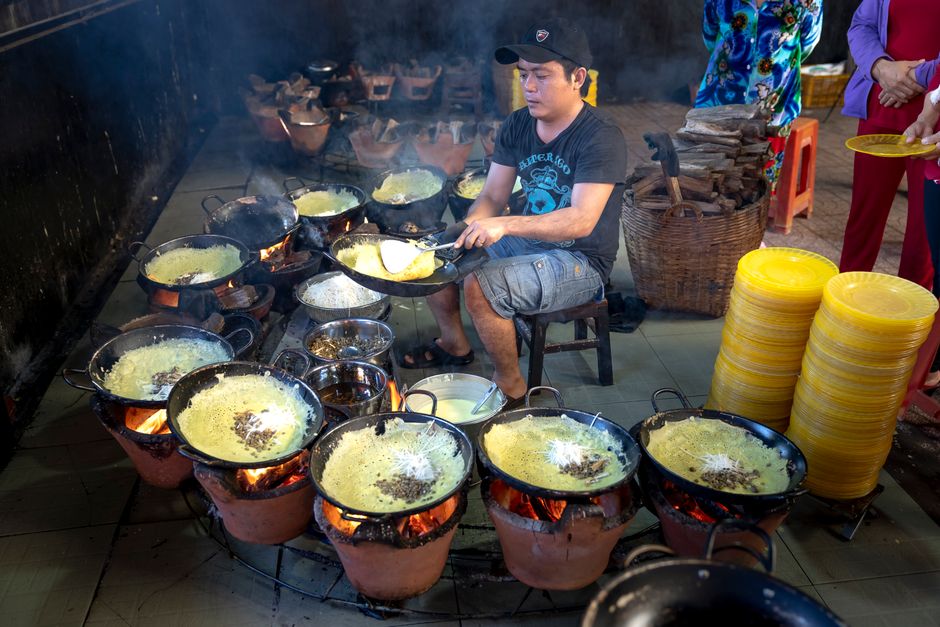
Banh xeo is not a crepe. It’s not an omelet. It’s a rice flour pancake fried in pork fat until the edges crack like glass. Inside: shrimp, pork belly, bean sprouts, and mung beans. You tear off a piece, wrap it in mustard leaf or lettuce with herbs, and dip it in nuoc cham.
The name literally means “sizzling cake”—the sound the batter makes when it hits the hot pan. The best ones are cooked in cast iron over charcoal. The batter has turmeric, which gives it that yellow color. The crispness is the point. A soggy banh xeo is a failed banh xeo.
In Saigon, go to Banh Xeo 46A (46A Dinh Cong Trang). It’s been there since the 1980s. The banh xeo comes out the size of a dinner plate. 50,000 VND ($2.00). In the Central region, they make a smaller version called banh khoai that’s thicker and less crispy—not my preference, but some people swear by it.
Common mistake: eating it with a fork and knife like a pancake. Wrong. Hands. Wrap, dip, eat. If you’re not messy, you’re doing it wrong.
Cha Ca: The One-Dish Restaurant
Cha Ca La Vong in Hanoi has served one dish for over 100 years. One dish. The restaurant is named after the dish. The street is named after the restaurant. That’s how good it is.
Cha ca is turmeric-marinated fish (usually hemibagrus, a type of catfish) cooked tableside in a pan with dill, scallions, and oil. You add rice noodles, peanuts, herbs, and mam tom—fermented shrimp paste. The shrimp paste is the make-or-break ingredient. It smells like a dock at low tide. It tastes like umami concentrate.
Price: 250,000 VND ($10) per person. That’s expensive for Vietnam. Worth it. The fish is cooked in front of you in a cast iron pan. The dill wilts into the oil. You mix everything in a bowl and the mam tom binds it together.
If you skip the shrimp paste because it smells weird, you’re eating a different dish. The paste is the point.
The Street Food Rules Nobody Tells You
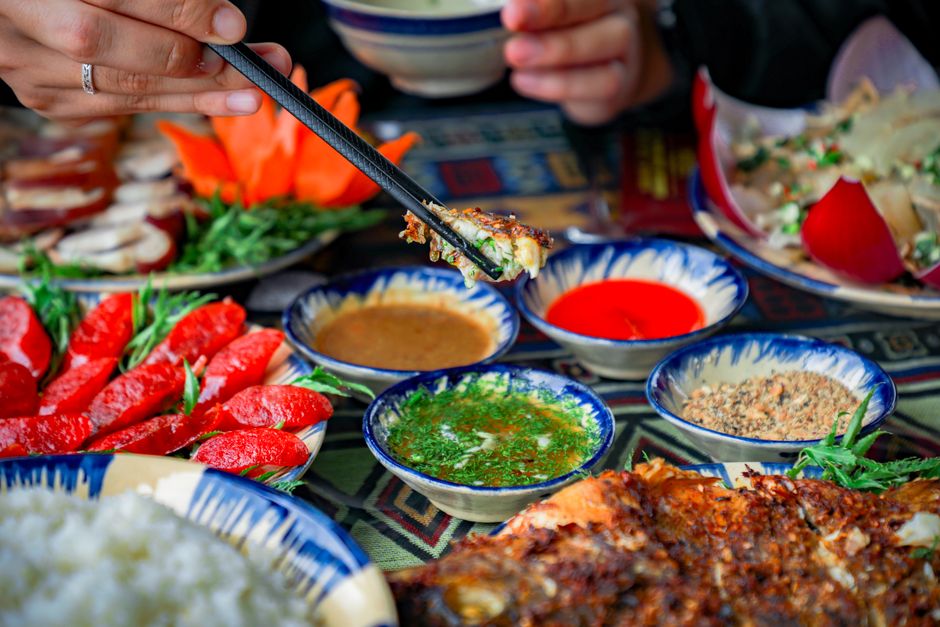
Before I give you two more dishes, let’s talk about how to eat street food in Vietnam without spending your trip in a bathroom. These rules matter more than the dish list.
- Eat where the locals are eating. Empty restaurant at 12:30 PM? Skip it. Full plastic stools at 7 AM? That’s your spot. Turnover means fresh ingredients.
- Watch the vendor’s hands. If they handle money and food without washing, move on. The best vendors have one person cooking and one person handling cash.
- Drink bottled water. Ice in drinks is usually fine at busy places—it comes from commercial ice factories. But if you’re unsure, skip the ice.
- Start small. Order one dish. Watch how locals eat it. Copy them. Don’t order five things at once and waste food.
That last point matters. Food waste in Vietnam is taken seriously. If you order it, eat it.
Two More Dishes and a Verdict
Banh cuon is the breakfast food nobody talks about. Steamed rice flour sheets rolled around minced pork and wood ear mushrooms, topped with fried shallots and served with nuoc cham. The best version in Hanoi is at Banh Cuon Gia Truyen (14 Hang Ga). 35,000 VND ($1.40). The rice sheets are made to order on a cloth stretched over a steamer. You watch them peel each sheet off. It’s hypnotic.
Bun bo Hue is the spicy beef noodle soup from Hue that makes pho look bland. Thick round noodles, beef shank, pork knuckle, and a broth built on lemongrass, shrimp paste, and chili oil. It’s red, spicy, and unapologetic. In Hue, go to Bun Bo Ba Xuan (17 Nguyen Hue). 50,000 VND ($2.00). In Saigon, Bun Bo Hue An Nam does a solid version.
Here’s my verdict. If you have three days in Vietnam, eat bun cha in Hanoi, cao lau in Hoi An, and mi quang in Da Nang. Those three dishes cover the range of what Vietnamese food can be—smoky, chewy, crunchy, sweet, sour, and spicy. Pho is a starting point. Banh mi is a snack. The real food requires a plastic stool and a specific address.
Skip the pho. Order the thing you can’t pronounce.