Are you trying to fit a Hoi An lantern night and the Hai Van Pass into one short trip, only to find that the distances, festival dates, and weather do not line up neatly? March is one of the best months for Central Vietnam, but a careless plan can leave you in Hoi An on the wrong night or on a foggy mountain road with no time left for Hue.
The fix is simple: plan around the actual lantern calendar, keep one flexible day for the pass, and choose your crossing based on the experience you want. March 2026 offers a particularly useful window because Hoi An’s official Nguyen Tieu Festival runs from March 2 to 4. The rest of the month still brings lantern-lit evenings, but the largest traditional events happen during that early-March window.
Is March a good month for Hoi An and Hai Van Pass?
March weather favors a two-stop trip
Yes. March gives Central Vietnam a strong balance of warm days, manageable humidity, and better road conditions than the wettest part of the year. Da Nang’s tourism authority lists March through May among the best periods for beaches and the Hai Van Pass. Daytime temperatures often sit around 25 to 30°C in Da Nang and Hoi An, while evenings feel comfortable enough for walking the Old Town.
The mountain creates its own weather, though. Hoi An can have blue skies while the Hai Van summit sits inside low cloud. That happens because moist air from the coast meets cooler air around the pass. A forecast for Da Nang cannot guarantee clear views at the summit.
What March does not guarantee
March is not a promise of perfect sunshine. Early mornings can bring mist, and short showers can still appear. The north-facing descent toward Lang Co often feels cooler and wetter than the southern side. Pack a light waterproof layer, shoes with grip, and one warm layer for a motorbike ride.
My verdict: March is the best practical month for combining Hoi An and the pass if you can spare at least three nights. Travellers with only two nights should choose Hoi An first and treat the pass as optional.
Which Hoi An lantern night should you plan around?
The major March 2026 festival window
The most reliable date for a larger traditional celebration is March 2 to 4, 2026. Hoi An’s official heritage notice lists the Nguyen Tieu Festival across those dates. The March 2 program includes a re-creation of Hoi An in the early twentieth century, with candlelight, traditional dress, music, and performances. On March 4 at 8:30 a.m., a procession and incense ceremony begins at Hoi An Communal House and Quan Cong Temple.
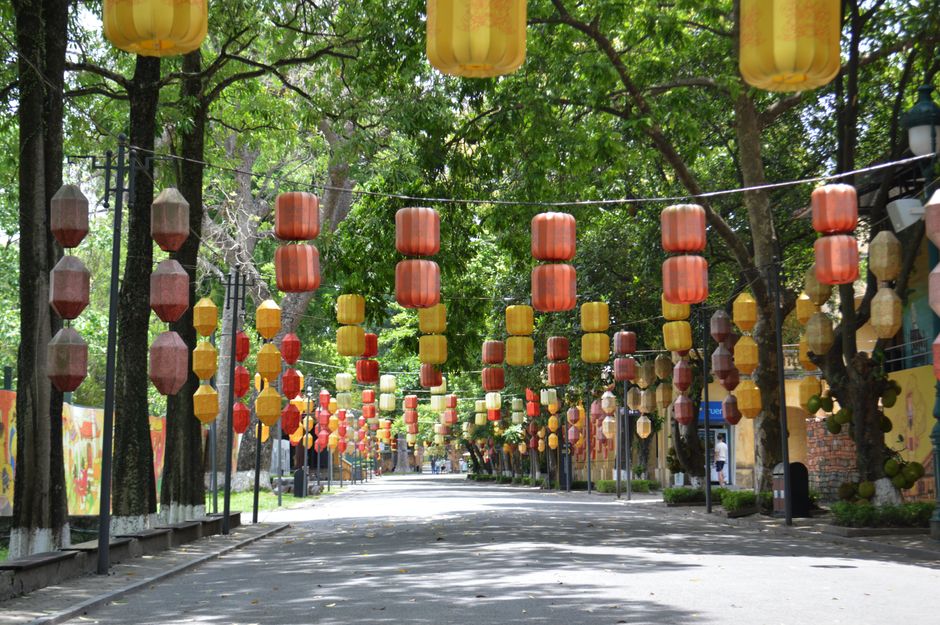
That does not mean the town becomes dark on other nights. Lanterns remain part of Hoi An’s normal evening streetscape, and the riverside stays photogenic throughout March. The difference is the scale and cultural program, not the basic presence of lanterns.
Match your date to your priority
| Dates | Best for | What to expect |
|---|---|---|
| March 2 | Traditional atmosphere | Old-town re-creation, performances, and candlelit scenes |
| March 3 | Lantern streets and river photos | Busy evening around the central Old Town and Thu Bon River |
| March 4 | Morning ceremony | 8:30 a.m. procession, then regular sightseeing later |
| March 5 onward | Lower-pressure visit | Lantern-lit streets without the main festival crowds |
Book accommodation within walking distance of the Old Town for the festival dates. A hotel near An Bang Beach may look peaceful on a map, but the return ride after the evening crowds can take far longer than expected. The official 2026 Hoi An festival notice is the right place to verify program changes.
How should you build a four-day Hoi An and Hai Van itinerary?
A workable four-day sequence
- Day one: Arrive in Da Nang or Hoi An, settle in, and walk the Old Town before dinner. Do not schedule the pass after a long international flight.
- Day two: Use the morning for the Japanese Covered Bridge, assembly halls, riverside lanes, and a slow lunch. Return to the Old Town after sunset for lanterns. During the March 2 to 4 festival, reserve this evening for the public events.
- Day three: Leave Hoi An around 8 a.m. for Da Nang, Son Tra Peninsula if time allows, and the Hai Van Pass. Stop at the summit, continue to Lang Co, then finish in Hue or return to Da Nang.
- Day four: Keep this as a weather buffer. If the pass was clear, explore Hue. If fog cancelled the road trip, take the coastal train or a private car later in the day.
Why the order matters
Putting Hoi An first protects the lantern experience. The Old Town works well on arrival day, while the pass needs daylight, dry pavement, and enough time for stops. Starting in Hue and rushing south can work, but it gives weather less room to change your plan.
For a three-day trip, remove Son Tra and keep the route tight: two nights in Hoi An, then one pass day ending in Da Nang or Hue. Do not promise yourself the summit, Lang Co, Hue Citadel, and a late flight on the same day. The road may be only about 125 kilometers from Hoi An to Hue, but photo stops and traffic make it a full travel day.
What is the best way to cross the Hai Van Pass?
The road, train, and car solve different problems
The Hai Van Pass is a 21-kilometer mountain road rising to roughly 496 meters. It is not just a viewpoint with a short driveway. The route includes sharp bends, mixed traffic, sudden cloud, and exposed sections above the coast. Choose the crossing first, then build the day around it.
My clear recommendation
Take a private car if you want the summit, Lang Co, and Lap An Lagoon in one day. The driver can stop safely, carry luggage, and adjust the route when cloud blocks the view. Take the train if your priority is scenery with low stress. The railway hugs the coast at sea level and gives you views the road cannot offer, but it cannot stop at the summit.
When to cancel the road
Skip a self-drive crossing in heavy rain, thick fog, or after dark. Motorbikes cannot use the Hai Van Tunnel, so riders must use the exposed pass road. A clear forecast at 7 a.m. does not cancel the need to check conditions before leaving. For road facts and transport comparisons, the official Vietnam Tourism Hai Van Pass guide provides a useful baseline.
What mistakes ruin a March visit?
The planning errors that cost the most time
- Arriving on the wrong night: “Lantern festival” can mean a normal lantern-lit evening or the larger Nguyen Tieu program. Check the date before booking a non-refundable room.
- Trusting a Da Nang forecast: The summit can be cloudy while the coast looks bright. Leave room for a second attempt.
- Riding after sunset: The pass has bends, trucks, changing visibility, and limited lighting. Finish the crossing in daylight.
- Carrying a large suitcase on a motorbike: A backpack is manageable; a hard case changes balance and makes stops awkward. Send luggage by car or leave it at the hotel.
- Scheduling a flight too soon: A private car from Hue or Hoi An can face traffic near Da Nang. Add at least four hours before an international departure.
What not to force into one day
Do not combine a sunrise at An Bang Beach, a full Hoi An walking tour, the complete Hai Van Pass, Hue Citadel, and a late-night return. Each item sounds close on a map, but the pass rewards slow stops rather than checklist travel. The better compromise is one cultural morning, one road crossing, and one destination at the end.
My strongest warning is for inexperienced scooter riders. The route looks easy in photographs because the camera hides traffic, road camber, and wet pavement. If you have never handled a scooter on mountain bends, the private car or train is the better trip.