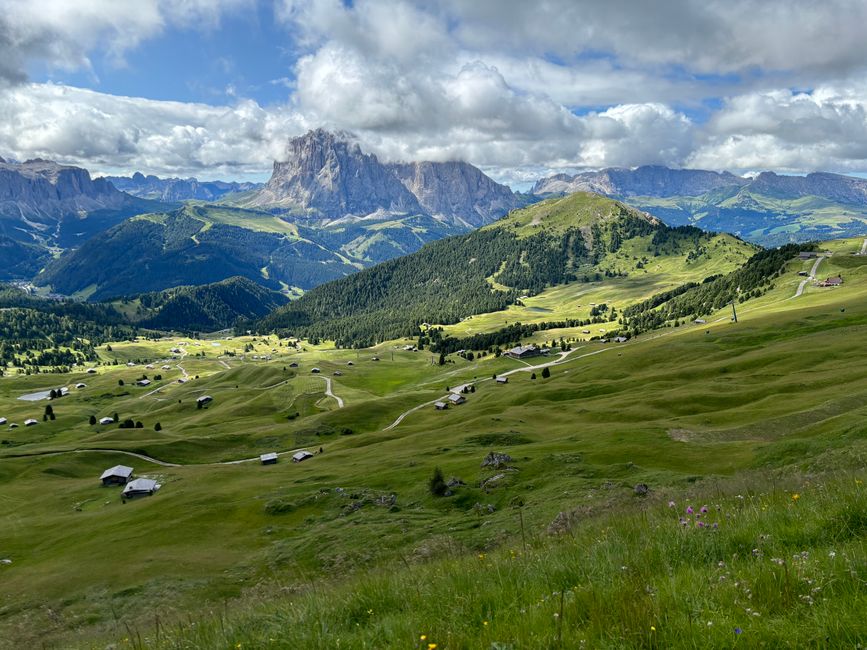
The common mistake is to treat June as full summer in the Dolomites. Valley meadows can be bright green while a trail at 2,500 metres still holds snow. Some huts open in the first week of June, while nearby lifts and high passes may start later. The reward is real: fewer crowds, long daylight, fresh alpine flowers, and clear views before the main July rush. The best June trip uses flexible routes, checks each hut directly, and keeps a lower-altitude backup for every high hike.
Is June a good month to hike the Dolomites?
What June does better than July
June is the best month for travellers who value quiet trails over guaranteed access to every famous viewpoint. The valleys around Ortisei, Selva di Val Gardena, Castelrotto, and Cortina are already active, but the busiest high routes have not reached their summer peak. Between April and June, snow melts and alpine flowers appear across the lower meadows. You can see gentians, rhododendrons, and bellflowers beside trails that would look dry later in the season.
Daylight also works in your favour. Around the June solstice, sunrise is before 5:30 a.m. and sunset is after 9 p.m. in much of South Tyrol. That gives you room to start early, stop for lunch at a hut, and still return before storms build in the afternoon.
What June does not guarantee
Snow remains the deciding factor above roughly 2,000 metres. North-facing slopes, shaded gullies, and passes can be slippery. A route marked as open on a map may still feel like a spring mountaineering outing after a cold week. Late June is the best window if your priority is a wider choice of lifts and huts. For the first half of the month, choose meadow routes and valley-based day hikes instead of committing to a high traverse.
What is open in the Dolomites in early June?
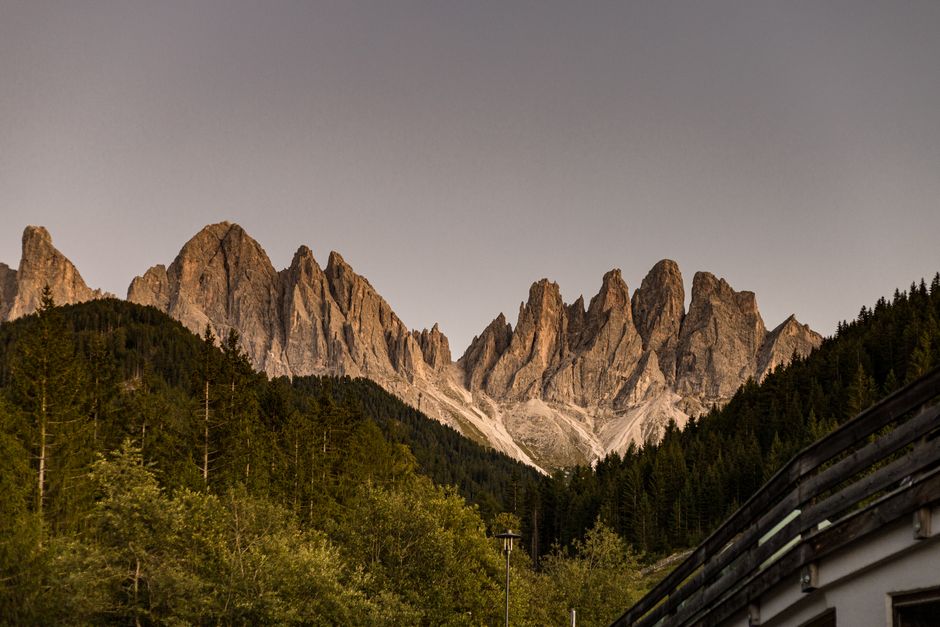
The safest booking strategy is to choose a base with several working lifts and many trails at different elevations. Val Gardena and Alpe di Siusi are stronger early-June choices than a remote high hut itinerary because you can change plans without moving hotels.
| Area | Useful 2026 opening information | Best June use | Main caution |
|---|---|---|---|
| Alpe di Siusi | Seiser Alm cableway runs from 22 May to 2 November; 8:00–18:00 in early June | Easy meadow walks, Bullaccia, hut lunches | Afternoon storms and muddy tracks after rain |
| Val Gardena | Ortisei–Seceda lifts run from 22 May; several higher lifts start between 6 and 20 June | Seceda viewpoints, Adolf Munkel approaches, flexible day hikes | Individual hut and lift dates vary |
| Cortina d’Ampezzo | Many summer trekking routes operate from June to October | Lower valley trails, Cinque Torri later in June | Tre Cime and high paths may hold snow |
| High hut traverses | Opening dates vary by refuge, weather, supplies, and access | Late-June overnight trips only after direct confirmation | Snow can block the route between two open huts |
Check the last lift, not only the first lift
For current timings, compare the Val Gardena 2026 lift schedule with the Seiser Alm cableway schedule. A lift that opens at 8:30 is useful only if its last descent gives you enough time to finish the route. Save the final descent time offline. Missing it can turn a relaxed hike into a long road walk.
Which June hikes are the safest bets?
For early June, the winner is the Alpe di Siusi plateau. It gives you broad scenery without forcing you onto a narrow, snow-covered pass. For the second half of June, Val Gardena offers the strongest mix of famous views, huts, and route choices.
Alpe di Siusi: Bullaccia and the plateau circuits
Use the cableway from Seis or the gondola from Ortisei, then build a 7–10 kilometre loop around Bullaccia, Puflatsch, or the Compatsch meadows. Allow 2.5–4 hours and roughly 200–450 metres of climbing, depending on the route. This is the best first hike after arrival because the terrain is open, waymarked, and easy to shorten. The plateau also has multiple huts, so you can turn a weather delay into lunch instead of a problem.
Val Gardena: Seceda to Rifugio Firenze
Seceda delivers the famous serrated ridgeline with a short walk from the upper station, but the route toward Rifugio Firenze becomes more serious when snow covers the shaded sections. Plan 8–12 kilometres and 3–5 hours for a route that stays on the main paths. Confirm the hut’s opening before setting out. If the higher trail is soft or icy, use a viewpoint loop and return by lift.
Cortina: Tre Cime only after a late-June check
The Tre Cime loop is about 10 kilometres with around 400 metres of ascent and usually takes 3.5–5 hours. It is a superb late-June choice when the road, shuttle, refuge, and trail conditions line up. It is a poor first-day choice in early June because snow can hide the trail and the exposed loop offers little shelter in bad weather. For a safer Cortina day, choose a lower route around Lago di Braies or a forest-and-meadow trail near the valley.
How should you plan a June hut-to-hut trip?
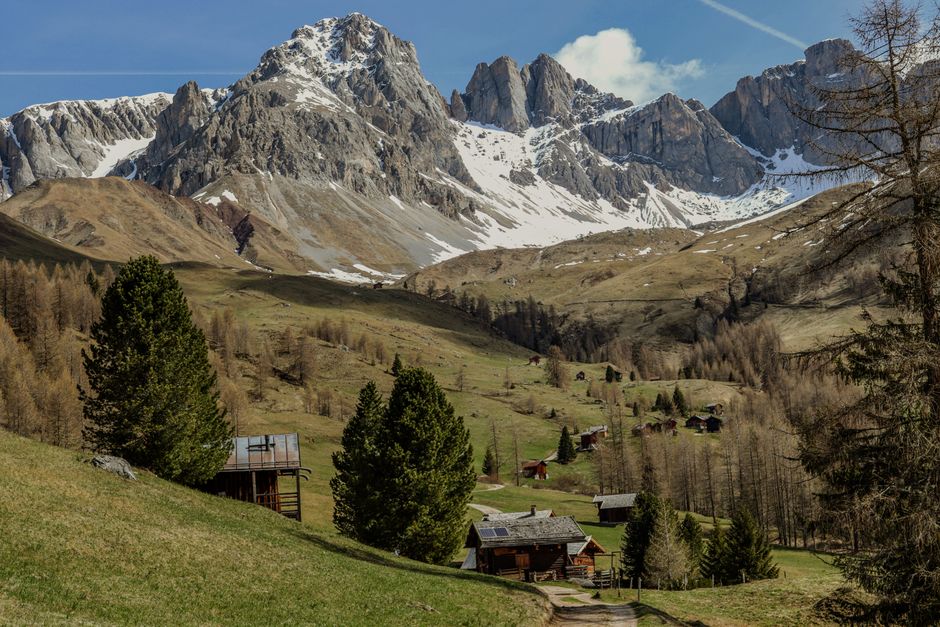
Book the hut, not the dream itinerary. A perfect seven-day traverse on a map is not a plan until every refuge confirms its opening and the connecting passes are usable. In early June, a valley-based trip with one optional hut night is the smarter choice.
- Choose one valley first. Stay three or four nights in Val Gardena, Alpe di Siusi, or Cortina. You will save time and gain several backup routes.
- Confirm each refuge directly. Ask about the exact opening date, meal service, bedding, shower access, payment method, and snow on the approach. A listing page can lag behind a weather change.
- Carry a real navigation backup. Download the route, save the hut phone number, and bring a paper map. Phone batteries drop quickly in cold, wet conditions.
- Set a turnaround time. If a pass is still snowbound, do not push because the reservation is waiting. Use the lower route or return to the valley.
What to reserve first
Reserve the most popular refuge first, then build the route around it. Rifugio Locatelli, Rifugio Averau, and Rifugio Firenze can fill quickly once their summer calendars open. Ask for a cancellation policy and carry enough food for one missed hut stop. A packed sandwich and 1.5–2 litres of water can remove pressure from the day.
When a hut night is the wrong choice
Skip the overnight if you are travelling with children who tire quickly, have no experience on snow, or want fixed restaurant and transport options. A comfortable hotel in Ortisei or Castelrotto gives you better control in unstable weather. The Dolomites do not become less impressive because you sleep at valley level.
What mistakes ruin a June Dolomites trip?
Here is the blunt verdict: June fails when travellers confuse a published summer trail with a guaranteed snow-free trail, reserve a high hut before checking its opening date, and treat lifts as background transport instead of a fixed part of the timetable. The second mistake is packing for warm Italy at valley level, then discovering that rain, wind, and snow turn a sunny 18°C forecast into a cold day above 2,000 metres. The third is starting late because the route looks short on a map; afternoon storms build quickly, wet rock becomes slick, and a missed last lift can add several kilometres on the road. Choose June only if you can change the route, accept one lower-altitude day, and check the local forecast each morning; if you need every famous high trail to be open, travel from late July through September instead.
Which Dolomite base is best for a June hiking trip?
Val Gardena wins for the best all-round trip
Val Gardena wins for most first-time visitors. Ortisei, Santa Cristina, and Selva put you near Seceda, the Puez-Odle area, Sassolungo, and Alpe di Siusi. You get lifts, buses, restaurants, and enough lower routes to keep hiking after a snowy night. Choose Ortisei for the easiest transport and restaurant access; choose Selva for a faster start toward higher trails.
Choose the base that matches your risk tolerance
Alpe di Siusi is the best base for families, casual hikers, and an early-June trip built around broad meadows and hut lunches. Cortina is the better choice for dramatic rock scenery, Cinque Torri, and Tre Cime, but it rewards a later June arrival and more careful route checks. Alta Badia suits travellers who want sunny valleys, food-focused huts, and flexible walks, though high passes still need a condition check.
| Base | Best for | June verdict |
|---|---|---|
| Val Gardena | First visit, mixed abilities, many lift-access hikes | Best overall choice |
| Alpe di Siusi | Easy walks, families, reliable meadow routes | Best for early June |
| Cortina | Tre Cime, Cinque Torri, dramatic rock scenery | Best from late June |
| Alta Badia | Food, sunny valleys, flexible day hikes | Best for relaxed itineraries |